

How to pay income tax in Germany
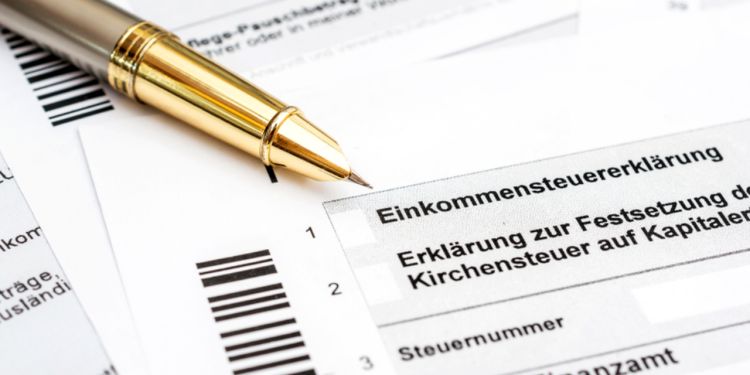
When you begin to earn money in Germany, your income is subject to different kinds of deductions (i.e., retirement and unemployment insurance, health insurance, nursing care insurance), including income tax based on your tax bracket. These deductions will lead to your net income, which understandably is less than the gross salary stated on your contract.
Couples in Germany (married or registered cohabiting partners) submit a joint tax return, even if their taxes are under different brackets. No matter what type of work you do (i.e., full-time, part-time, freelance work, etc.), your wages are taxed, usually on behalf of your employer. Hence, you don't have to worry about the monthly practicalities; however, it is highly advisable to keep track of your payslips and any income tax-related documents. At Expat.com, we know that understanding the local tax system is essential for settling properly in a new country. So, here is what you need to know about the German income tax.
Tax brackets in Germany
In Germany, there are six tax brackets (Steuerklassen). A person can switch from one to another when a big change in their income occurs or their life circumstances change (e.g., get married, have children, undertake more than one job, etc.). Tax bracket II is for single parents; bracket III is for married couples and civil partners and applies to the spouse who earns more, whereas the spouse with the lower income falls under bracket V. Tax bracket IV is for married couples and civil partners who earn a similar amount of money. Bracket VI is for employees with more than one job, and bracket I is for single or separated individuals who don't fall into brackets II or III.
Good to know:
The tax bracket determines the value of social benefits, such as social security and maternity leave.
Social security in Germany
As we have seen in our article, the healthcare system in Germany, Germany offers great support to individuals who fall ill or lose their jobs as part of its social security system. Nevertheless, in order to benefit from these pillows (i.e., statutory health insurance, statutory pension insurance, statutory accident insurance, statutory unemployment insurance), you have to be a member of the respective insurance scheme(s) towards which you pay monthly contributions from your salary. Every employee is issued a social security card, which is proof of the employee's contribution to the statutory insurance. The card has a unique pension insurance number (Rentenversicherungsnummer), which remains the same regardless of a change of employer and, in the event of a loss, can be re-issued by the German Pension Insurance (Deutsche Rentenversicherung).
Good to know:
The moment you become employed in Germany, you are automatically subscribed to the pension, long-term care, accident, and unemployment insurance schemes. For health insurance, you can opt for a private provider if you like.
Important:
If you don't wish to pay church tax, leave the field “religion” empty; otherwise, about eight percent of your gross income will automatically be transferred to the church (Kirchensteuer).
Declaring your taxes as a self-employed in Germany
Self-employed and freelancers bear the responsibility of declaring their income taxes. However, in order to do that, you need to have a personal tax ID (Identifikationsnummer) and a Steuer-ID (Steueridentifikationsnummer). These numbers are very similar but used in different situations. If you have just arrived in Germany, you will receive the tax ID a few days after you have registered your address in Germany, but if you are not new to the country, you can request the tax ID online or visit your local tax office. Even if you deregister and then re-enter the country, your tax ID will remain the same. This number is important and will be needed for many other administrative procedures in the country. The next step is to register with the German tax authorities and apply for an electronic tax card (Lohnsteuerkarte), which you will get from the tax services of your municipality upon presentation of your residency certificate and passport.
As a self-employed in Germany, you must pay income tax every quarter (based on your own income estimates) during the first year of activity. The following year, you will need to complete a single tax return. When you have sent your first tax declaration or registered your own business, you will also receive a local tax number (Steuernummer) allocated by your regional Finanzamt, which may change when you move house or get married. Therefore, you may need to go through several Steuernummern during your stay in Germany.
Many self-employed people in Germany decide to hire an accountant to help them with their tax returns. The different forms plus the challenge of a foreign language can make filling them out yourself complicated (and very time-consuming).
Attention:
A tax ID is not the same as a tax number (Steuernummer), which is also necessary for any tax-related activities.
Useful links:
Request a tax ID online
Tax return in Germany
At the end of each calendar year, you may submit your income tax return form to the tax office. The form includes information about your earnings and tax deductions throughout the year. The tax office will check whether you paid more tax, and if this is the case, you will be entitled to receive the excess back. If you need help with this kind of paperwork, you can reach out to a tax assistance association or a tax consultant. In some cases, a tax return (Veranlagungspflicht) is mandatory; for example, when working for several employers, or if you have an additional income such as through rent or being on supplementary benefits such as child support, etc. The tax return has to be filed before the 31st of May. Additional time is granted if your tax return file is completed by a tax advisor. Most Germans use a tax consultant (Steuerberater) when owning a business or earning additional money through property.
Useful links:
Tax return forms
Bundesverband Lohnsteuerhilfevereine e.V. (BVL) group of income tax assistance associations
Smartsteuer and Steuertips software to submit your tax declaration online
Double taxation in Germany
If you have worked more than 183 days in Germany and your country has signed agreements with Germany to avoid double taxation (Doppelbesteuerung), you must pay income tax in Germany. The fiscal year in Germany runs from January 1 to December 31. Non-residents are taxed on their German income only. Germany has signed agreements with hundreds of countries to avoid double taxation.
Useful link: